
Val Kilmer’s career is a fascinating journey of transformation, creativity, and resilience. Known for his intense dedication to his craft and his ability to disappear into characters, Kilmer’s career has been defined by his pursuit of authenticity, no matter the personal cost. From his unforgettable performance as Doc Holliday in Tombstone to his iconic portrayal of Iceman in Top Gun and the haunting recreation of Jim Morrison in The Doors, Kilmer’s roles have left an indelible mark on Hollywood.
But beyond the roles, Kilmer’s story is one of personal reinvention. His commitment to his art has always been the driving force in his career, but it has also been the source of intense personal challenges. Overcoming these obstacles has required more than just talent—it’s taken a willingness to transform not only as an actor but as a person. Through all the highs and lows, Kilmer’s journey remains a testament to the transformative power of art and resilience in the face of adversity.
The Early Years: From Juilliard to Hollywood
Val Kilmer’s acting career began long before he became a household name in Hollywood. Born in Los Angeles in 1959, Kilmer had a passion for acting from an early age. However, it was his time at Juilliard, one of the world’s most prestigious drama schools, that truly shaped his approach to the craft. Kilmer was accepted to Juilliard at just 16 years old, one of the youngest students ever admitted. His time there was marked by a deep commitment to learning the nuances of acting, including the method acting techniques that would later define his style.
Kilmer’s training at Juilliard instilled in him a belief that acting was more than just performing lines—it was about becoming the character, about understanding their motivations, their emotions, and their deepest fears.
This approach would serve him well in his career, as he went on to create some of the most memorable characters in modern film. His intense dedication to his craft became a hallmark of his career, earning him both admiration and, at times, frustration from his colleagues.
In 1984, Kilmer’s big break came when he was cast in the film Top Secret! a parody directed by Jim Abrahams. Although the film itself didn’t perform well at the box office, Kilmer’s performance caught the attention of Hollywood. Just two years later, he was cast as Iceman in Top Gun (1986), a role that would catapult him into superstardom.
Top Gun: The Birth of a Star
Kilmer’s role as the cool, calculating Iceman in Top Gun was a turning point in his career. The film, which starred Tom Cruise as Maverick, was a massive commercial success and became a cultural touchstone of the 1980s. Iceman, with his piercing blue eyes, chiseled jawline, and confident demeanor, became one of the most iconic characters in film history.
While the role helped Kilmer gain widespread fame, he approached it with his characteristic seriousness. Unlike other actors who might have leaned into the fun of playing a fighter pilot, Kilmer took a more methodical approach. He deliberately kept a distance from Tom Cruise, his co-star, to create a sense of rivalry between their characters. This decision, while unconventional, helped to establish the authentic tension between Maverick and Iceman, making their eventual friendship all the more impactful. Kilmer’s commitment to realism in his portrayal of Iceman was just the beginning of his journey toward becoming one of Hollywood’s most dedicated and versatile actors.
The Doors: The Role of a Lifetime
Kilmer’s performance as Jim Morrison in The Doors (1991) is widely regarded as one of his greatest achievements. Directed by Oliver Stone, the film tells the story of the iconic rock band and its charismatic, troubled frontman. Kilmer’s portrayal of Morrison was nothing short of transformative. He didn’t just play Morrison—he became him.
Kilmer immersed himself completely in the role, spending hours listening to Morrison’s music, watching archival footage, and studying his every move.
Kilmer’s dedication was so intense that he often spent time recording demo tapes, mimicking Morrison’s voice so convincingly that members of The Doors themselves were sometimes unable to tell the difference between the two. Kilmer’s portrayal of Morrison was not just a performance—it was a deep dive into the psyche of the man who had become both a rock legend and a tragic figure. His ability to capture Morrison’s restlessness, brilliance, and self-destructive tendencies made the film an unforgettable experience.
While the film was critically acclaimed, Kilmer’s transformation into Jim Morrison came at a personal cost. He became so deeply connected to the character that it affected his behavior off-screen. The emotional intensity of the role created tension between Kilmer and the filmmakers, but it also showed the lengths to which Kilmer was willing to go to capture the essence of his characters.
Tombstone: The Legendary Doc Holliday
One of Kilmer’s most memorable performances came in 1993 when he portrayed Doc Holliday in Tombstone. The film, a gritty retelling of the legendary gunfight at the O.K. Corral, featured Kilmer as the quick-witted, tuberculosis-ridden gunfighter who stood by his friend Wyatt Earp, played by Kurt Russell.

Kilmer’s portrayal of Holliday became one of the defining performances of his career. Known for his sharp humor and emotional depth, Kilmer brought a new dimension to the character of Doc Holliday. Despite his frailty, Holliday was a man of honor, fiercely loyal to his friends, and unafraid to confront death.
Kilmer’s commitment to the role went beyond the physical transformation; he reportedly filled his bed with ice before each scene to mimic the effects of tuberculosis, ensuring that he looked pale and fragile on camera. He practiced his quick-draw techniques repeatedly and stayed withdrawn between takes to maintain the character’s sickly appearance.
Kurt Russell, who played Wyatt Earp, later credited Kilmer’s performance as one of the reasons Tombstone was such a success.
Despite the intense dedication required for the role, Kilmer’s sense of humor and camaraderie made him a joy to work with on set. Kilmer’s Doc Holliday became the standout character of the film, and his witty, emotional performance left an indelible mark on audiences.
Batman Forever: The Struggles of Fame
In 1995, Kilmer took on the role of Bruce Wayne/Batman in Batman Forever. Directed by Joel Schumacher, the film was a departure from the darker, more serious tone of its predecessors. Instead, Batman Forever embraced a more colorful, flamboyant approach, with Kilmer’s portrayal of Bruce Wayne at the center of the spectacle.
Kilmer’s portrayal of Batman was a stark contrast to the previous versions, particularly Michael Keaton’s brooding and intense Batman.
Kilmer, however, was dissatisfied with the direction of the film. His portrayal of Bruce Wayne was serious and introspective, focusing on the isolation and emotional distance of the character. Unfortunately, the film’s emphasis on spectacle and commercial appeal did not align with Kilmer’s vision for the character. As a result, Kilmer chose not to return for the sequel, Batman and Robin (1997).
Kilmer’s experience with Batman Forever marked a shift in his career. While the film was a commercial success, Kilmer’s discomfort with the production process and his dissatisfaction with the direction of the film led him to distance himself from the Hollywood machine. It was clear that Kilmer valued artistic integrity over commercial success, and this sentiment would continue to shape his career moving forward.
The Personal Struggles: A Life of Isolation and Transformation
As Val Kilmer’s career continued to evolve, so did his personal life. While he enjoyed success in Hollywood, Kilmer’s personal challenges became increasingly apparent. His dedication to his roles often led to periods of isolation, as he withdrew into the characters he was portraying. This isolation, combined with the intense pressure of maintaining a public persona, took a toll on Kilmer’s mental and emotional well-being.
Kilmer’s personal struggles intensified as he entered the latter part of his career. In 2015, he was diagnosed with throat cancer, a diagnosis that would change the course of his life. The illness affected Kilmer’s voice, leaving him with a permanently altered tone and making it difficult for him to continue working as an actor.
This physical transformation, though challenging, did not stop Kilmer from continuing his work in the arts.
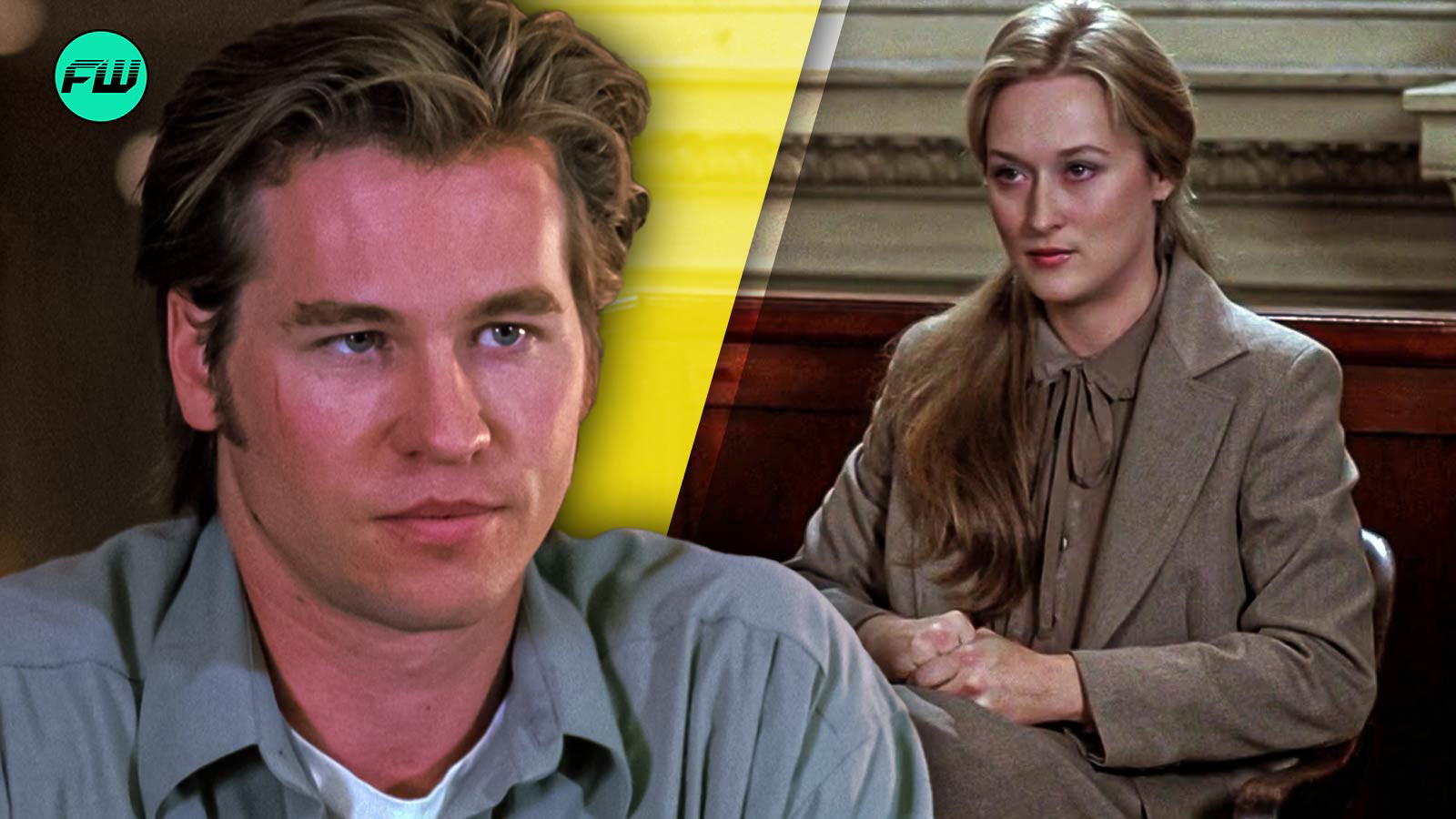
In 2021, Kilmer released a deeply personal documentary, Val, which chronicled his life and career through personal footage and reflections. The film provided a rare glimpse into the actor’s vulnerability and his journey through illness. Kilmer’s son, Jack, served as the narrator, filling in for his father when Kilmer’s voice was no longer capable of doing so.
Despite his struggles, Kilmer’s passion for creativity never waned. His documentary revealed that, even as he faced his personal challenges, he continued to write poetry, paint, and perform stage work. His creative spirit remained intact, a testament to the power of art to transcend physical limitations.
A Triumphant Return: Top Gun: Maverick
In 2022, Kilmer made a triumphant return to the screen in Top Gun: Maverick. His brief but emotionally charged appearance as Iceman was a powerful moment in the film. For many fans, seeing Kilmer reprise his role as Iceman after so many years—and after battling throat cancer—was a poignant reminder of his resilience and dedication to his craft.
Kilmer’s return to Top Gun: Maverick was not just a career milestone—it was a victory for the actor, who had fought through immense personal challenges to appear on screen again.
The film’s success, both critically and commercially, was a testament to Kilmer’s enduring influence in Hollywood, and his role as Iceman was a fitting tribute to the actor’s legacy.
Val Kilmer’s Lasting Legacy
Val Kilmer’s career has been defined by his commitment to transformation. Whether it was his immersion into the role of Jim Morrison, his portrayal of Doc Holliday, or his intense dedication to characters like Batman, Kilmer’s willingness to sacrifice comfort for authenticity has made him one of the most respected actors of his generation.
His personal struggles, including his battle with throat cancer, have only deepened his legacy, showing that true artists continue to create, even in the face of adversity.
Kilmer’s journey is a powerful reminder that artistry requires more than just talent—it requires vulnerability, resilience, and a willingness to evolve.
His career, filled with transformative performances and personal challenges, continues to inspire those who follow in his footsteps, reminding us all that the pursuit of greatness is not just about success, but about how we rise above the obstacles we face.