
Dolly Parton: The Queen of Country, Defiant in the Face of Conformity
Dolly Parton is a name that resonates deeply in the world of entertainment. She’s not just a country music icon, but a multi-faceted figure who has built an empire from humble beginnings. Known for her sweet voice, her entrepreneurial spirit, and her unwavering authenticity, Dolly Parton has become a living legend in American culture. But in the world of media, where the line between entertainment and control is often blurred, Dolly Parton has always carved out her own path.
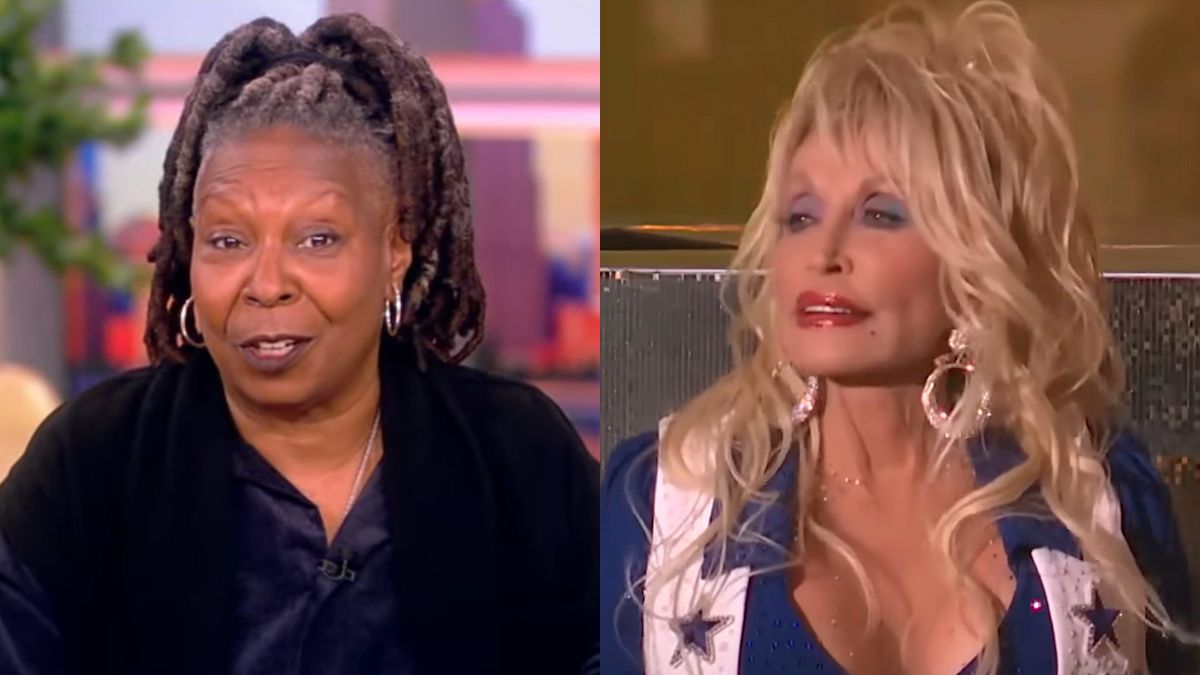
It was on a seemingly ordinary day that Dolly walked into the morning studio for her guest appearance on The View — the long-running talk show that brings together a diverse panel of women to discuss current events, pop culture, and personal stories. Dolly, ever the composed and confident figure, sat down with the hosts of the show, completely unaware that the hour ahead would unravel all the “safe television” rules that had governed public conversation for decades.
The Stage Is Set: Dolly Parton Meets The View
When Dolly Parton walked into the studio that day, her aura of warmth and self-assurance was immediately apparent. Dolly, who had already navigated decades of criticism, media scrutiny, and industry challenges, exuded the kind of confidence that only someone who had mastered their craft and persona could. Known for her candidness and humorous approach to life, Dolly was ready for the lighthearted interview that The View was known for. She had been interviewed countless times before, and this would be just another opportunity to share her story and connect with the audience.
At first, the conversation was as expected: playful, warm, and filled with laughs. Jimmy Fallon-like banter was in full swing, and the women on the panel of The View couldn’t help but marvel at Dolly’s enduring charm and legacy. But soon, the conversation turned to a subject much more loaded—media pressure, the idea of “safe television,” and the unspoken expectations of public figures to adhere to a pre-ordained script.
As the conversation shifted, so did the energy in the room. It wasn’t a drastic change, but it was enough for those present to feel a subtle tension in the air. Dolly leaned in, speaking more seriously now, her tone measured and calm. With each word, she began to dismantle the facade of “safe” discourse.
Dolly’s Defiance: Challenging the Boundaries of Safe TV
“Sometimes these shows call it a conversation,” Dolly said, her voice steady, each word landing with precision. “But the moment someone says something outside the expected script, everything suddenly becomes uncomfortable.”
The studio audience fell silent. Those who had been laughing just moments earlier now sat in rapt attention, aware that this conversation was no longer about Dolly’s career or the usual banter one would expect from a lighthearted morning talk show. This was something much more personal, and much more profound. Dolly Parton was challenging the very concept of the television experience—she was questioning what had been deemed acceptable in a format known for its carefully controlled discourse.
Whoopi Goldberg, ever the sharp and commanding voice on The View, attempted to bring the conversation back to more comfortable territory, attempting to steer Dolly’s words toward lighter subjects. “This is a broadcast, not the Grand Ole Opry,” Whoopi retorted sharply.
But Dolly wasn’t backing down. She calmly interrupted, her voice still composed but now edged with a quiet force: “No, this is a place where people are expected to stay quiet enough to keep everyone comfortable. And the moment somebody speaks honestly without fear, everybody panics.”
The tone of the room shifted further. The other panelists, who had been engaged in friendly conversation up until that point, suddenly grew uneasy. Joy Behar shifted in her seat, and Ana Navarro looked at Dolly with wide eyes. It was clear that Dolly had turned the conversation into a much more serious and thought-provoking discussion. Her words carried the weight of a woman who had seen it all—fame, success, and the constant battle to maintain authenticity in an industry that thrives on spectacle.
For a brief moment, the atmosphere was thick with unspoken tension. Producers, who had long been used to controlling the conversation on The View, were reportedly running around backstage, unsure of how to handle the situation.
And then Dolly, without raising her voice or showing any sign of aggression, uttered the words that would reverberate through the media world: “You can call me old-fashioned. You can call me outspoken. But I built my life through hard work, kindness, resilience, and honesty—and I won’t apologize for speaking from the heart.”
The Moment of Truth: Dolly’s Walkout
The silence that followed was deafening. For a few seconds, the studio held its breath. Then, in what seemed like a natural yet powerful move, Dolly Parton calmly unclipped her microphone. She held it in her hand for a moment, as though weighing the significance of what had just transpired. There was no shouting, no dramatic gestures—just the quiet dignity that Dolly had maintained throughout her career. This was no ordinary departure.
She turned to the hosts, who were now visibly shaken, and said: “You can turn my microphone off.”
A slight pause hung in the air, before she finished her thought with finality: “But you cannot silence my voice.”
With that, Dolly placed the microphone carefully on the table, stood up, and left the studio.
There was no grand exit, no dramatic exit music—just Dolly Parton, quietly walking away from the very platform that had tried to silence her. The producers, the hosts, and the audience could only sit in stunned silence as the broadcast abruptly cut to a commercial.
The Internet Erupts: The Aftermath of Dolly’s Defiance
As soon as the segment cut to commercial, social media erupted. Clips of Dolly Parton’s walkout began circulating at lightning speed. Reactions poured in from viewers, celebrities, and pundits alike. Some praised Dolly for her bravery in standing up for authenticity in an age of manufactured content. They saw her act as a call for change, challenging the comfortable, sanitized conversations that often take place on talk shows.
Others questioned whether Dolly had gone too far, wondering if her actions had disrupted the very purpose of the show—light-hearted discussion and entertainment. But even those critical of her actions couldn’t deny the power of her message.
Within hours, the clip had gone viral. Hashtags like #DollyWalkout and #SilenceMyVoice trended worldwide. Many people applauded Dolly for speaking truth to power, for not letting herself be boxed into a role that was expected of her, and for refusing to be silenced.
Dolly had once again proved that her voice could never be contained. She had entered The View as a guest, but left as the driving force of a national conversation.
Dolly Parton: A Legacy of Resilience, Kindness, and Authenticity
Dolly Parton’s career has been built on resilience. From her humble beginnings in the Smoky Mountains of Tennessee to becoming one of the most beloved figures in the entertainment world, Dolly has faced adversity at every turn. And with every challenge, she has remained true to herself.
Her decision to walk off The View wasn’t just a moment of defiance—it was a reflection of the very principles that have shaped her life and career. Dolly Parton is a woman who has always chosen honesty over convenience, authenticity over conformity, and kindness over malice. Throughout her decades in the public eye, she has faced criticism, judgment, and the harsh glare of public opinion. Yet, she has never backed down from her truth.
By walking off the set that day, Dolly Parton reminded the world that there is power in speaking your truth, no matter the cost. In an industry that often values spectacle over sincerity, Dolly’s actions on The View became a resounding statement.

The Power of Authenticity in Today’s World
Dolly’s walkout also raises important questions about the nature of public discourse. In an era where political correctness and the pursuit of “safe television” often define what is acceptable in the media, Dolly’s refusal to stay within those confines represents a challenge to the status quo.
Her actions called attention to the limitations imposed by media outlets and the pressures that celebrities face to conform to certain narratives. In an age where conversations are often carefully curated and scripted, Dolly’s defiance was a stark reminder that there is power in speaking without fear, in speaking truthfully, and in resisting the urge to conform to expectations.
A Powerful Statement on Speaking from the Heart
Dolly Parton’s walkout on The View was a defining moment not just for her, but for the entire entertainment industry. It was an act of courage, authenticity, and a refusal to bend to the expectations placed on her as a public figure. Her quiet, deliberate departure from the show may have left the producers scrambling, but it also left the world with a message that transcended the moment: true conversations don’t come with volume controls.
Dolly Parton has built her career on honesty, kindness, and resilience, and she demonstrated that, even in the face of adversity, her voice cannot and will not be silenced.