
The world watched as celebrities gathered in the aftermath of 9/11, wearing their patriotic colors, posting flags on Instagram, and donating their voices to support the troops. With heartfelt speeches and high-profile appearances, they spoke the language of patriotism, wrapping themselves in the flag as they went home to their luxurious lives, free from the horrors of war.
But Toby Keith was different. While others took the safer route, posting their “thank you for your service” messages on talk shows and red carpets, he boarded helicopters and flew straight into war zones—18 times. He didn’t just visit the big bases where cameras and crowds waited. He flew into the heart of the storm, deep into the isolated outposts where soldiers lived without ever seeing a civilian face for months on end.
For over a decade, Toby Keith didn’t just perform for the troops—he became their lifeline. Each year, for two unpaid weeks, he rode into the most dangerous places on earth, places that many of us can barely comprehend. Iraq, Afghanistan, Kuwait. Tiny forward operating bases named after fallen soldiers, places where most celebrities would never dare to tread.
And yet, there he was, showing up year after year, never for fame, never for the spotlight, but for a group of men and women who needed to know they weren’t forgotten.
The critics back home—who, with their detached perspectives, labeled him a warmonger—had no idea of what they were missing.
They didn’t see the quiet sacrifice, the risk, and the dedication he put into his USO2GO program, which sent electronics, books, and comfort items to soldiers in the most remote outposts, where no entertainer would dare to go. These were the places where soldiers had long stopped hoping for a taste of home, where the only sounds were the echoes of war and the silence of isolation.
But Keith wasn’t interested in the red carpets or the photo ops. He was driven by a deep, unwavering commitment to those who wore the uniform.
Toby Keith wasn’t playing the big bases. He refused to.
Instead, he rode in Blackhawks, escorted by Apache gunships, into some of the most dangerous, isolated locations on the planet. And every time he performed, no matter how dire the situation, the troops gathered around him, their eyes filled with gratitude and hope.
He would close every show with “American Soldier,” and every single time, the crowd fell silent. This wasn’t a performance. It was a promise.
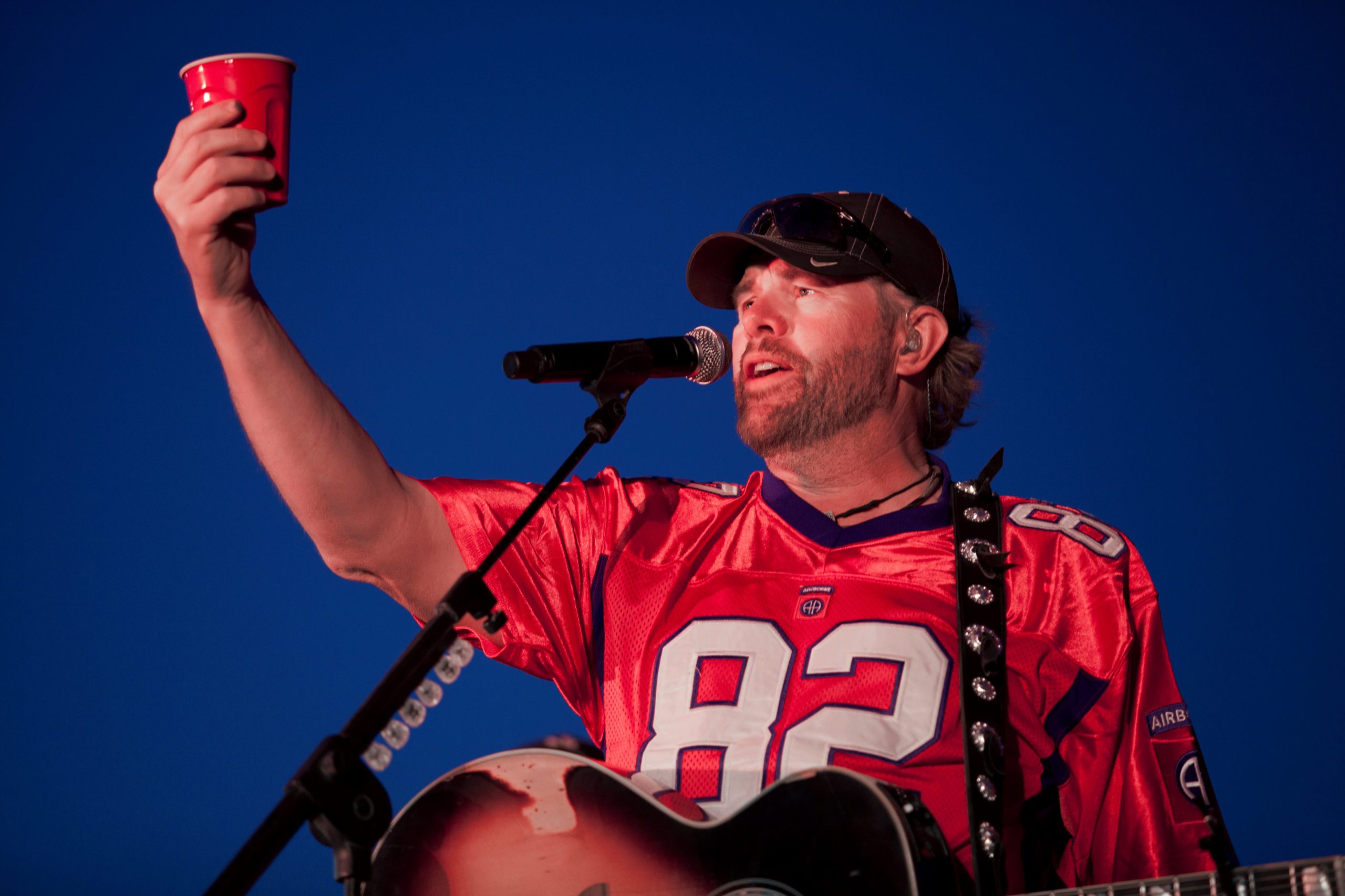
The Unseen Story of Toby Keith’s Commitment to the Troops
What made Toby Keith’s commitment so unique was not just the fact that he traveled into dangerous war zones to perform for the troops, but that he did it with the understanding that these performances were not about him. They weren’t about the accolades, the applause, or the media attention.
They were about the men and women who stood in the dust, facing unimaginable dangers every single day. He understood that what these soldiers needed was not just music—it was a reminder that they mattered, that their sacrifices were seen and valued by someone. It was a reminder of home.
The contrast between Toby’s approach and that of his critics couldn’t be starker. While some celebrities were content to show up in safe, controlled environments where the cameras captured their every move, Keith chose the harder, more dangerous path.
He traveled to places where there was no guarantee of safety, no assurance of comfort, and no audience except for the soldiers. But for him, that was enough. His actions were louder than any speech, more powerful than any Instagram post.
And it wasn’t about filling a void for himself; it was about fulfilling a promise to the kids in uniform who were so far from home that a small piece of music could be the one thing that made them feel human again.
The USO2GO Program: More Than Just Performances
While many celebrities contribute to charities or show support for the troops in their own ways, Toby Keith’s USO2GO program was a game changer. His initiative wasn’t just about sending gifts or donations. It was about sending hope.
It was about making sure that even the most remote soldiers, the ones in the hardest-to-reach places, had access to some semblance of normalcy. They didn’t have concerts with thousands of people cheering them on.
They had Toby Keith, who understood that sometimes, the most valuable gift you can give is simply a connection to home.
Keith’s dedication to the program was unwavering. He was often seen traveling to places where the air smelled of gunpowder and dust, where soldiers lived in tents, and where the threat of attack was always imminent. But for him, this was a calling.
While other celebrities basked in the limelight, Keith quietly flew in on helicopters, carrying with him more than just his music. He brought solace, comfort, and a sense of purpose to soldiers who had long since lost their sense of hope.
The program was a testament to his belief that no matter where the soldiers were stationed, no matter how dangerous or remote, they deserved to feel like they mattered.
The people who truly understood Toby Keith’s impact weren’t the critics back home or the award-show judges who passed him over.
The true measure of his influence came from the soldiers themselves. They were the ones who gave him something that no trophy, no accolade, could ever provide: their gratitude.
The stories they shared of how his visits and performances made them feel seen, made them feel valued, and even made them feel a sense of normalcy in the chaos of war, were the ones that mattered the most.

The Promise Keith Made and Kept
In a world where so many promises are broken, Toby Keith’s commitment to the troops stood as a shining example of what it means to truly keep your word.
He wasn’t performing for cameras or for fame. He was performing for the men and women who were risking their lives every day.
He made a promise to them, a promise that he would keep showing up, year after year, no matter how difficult it became. And he did. He didn’t stop, even when faced with his own personal battles, including a fight with stomach cancer.
Toby Keith’s legacy isn’t just one of music—it’s one of devotion, sacrifice, and love for a group of people who gave everything for their country.
The real beauty of Toby’s story isn’t just that he was a famous country musician who cared about the troops. It’s that he showed up when it mattered most.
He went to places that nobody else would. He brought comfort where it was needed, not for the applause, but for the soldiers who would never have the chance to hear from anyone else.
In a world where celebrity and fame are often more about the cameras than the cause, Toby Keith’s story stands as a rare example of someone who put his money where his mouth was—and then some.
The Silent Heroism of Toby Keith
At the end of the day, Toby Keith’s story isn’t just about his music or his performances. It’s about the silent heroism that goes unnoticed by many.
It’s about the man who quietly battled cancer, who spent years flying into war zones without seeking recognition, and who understood that some promises are too important to break. Toby’s impact goes far beyond the stage.
It’s in the hearts of the soldiers he played for, in the smiles of those who received a small piece of home during their darkest moments.
Toby Keith didn’t need a spotlight to be a hero—he was a hero every time he boarded a helicopter to fly into a war zone, every time he stood in front of troops who just wanted to hear the sound of a guitar.
For all the fame and accolades he could have pursued, Toby Keith chose a different path—one of quiet dignity, one of service to those who needed it most. His commitment to the men and women who serve our country, to the soldiers who risk everything every day, is a legacy that will outshine any award.
The world may never fully understand the depth of Toby’s sacrifice, but the soldiers who stood in the dust and heard him play, they understood. And that, in the end, is all that matters.
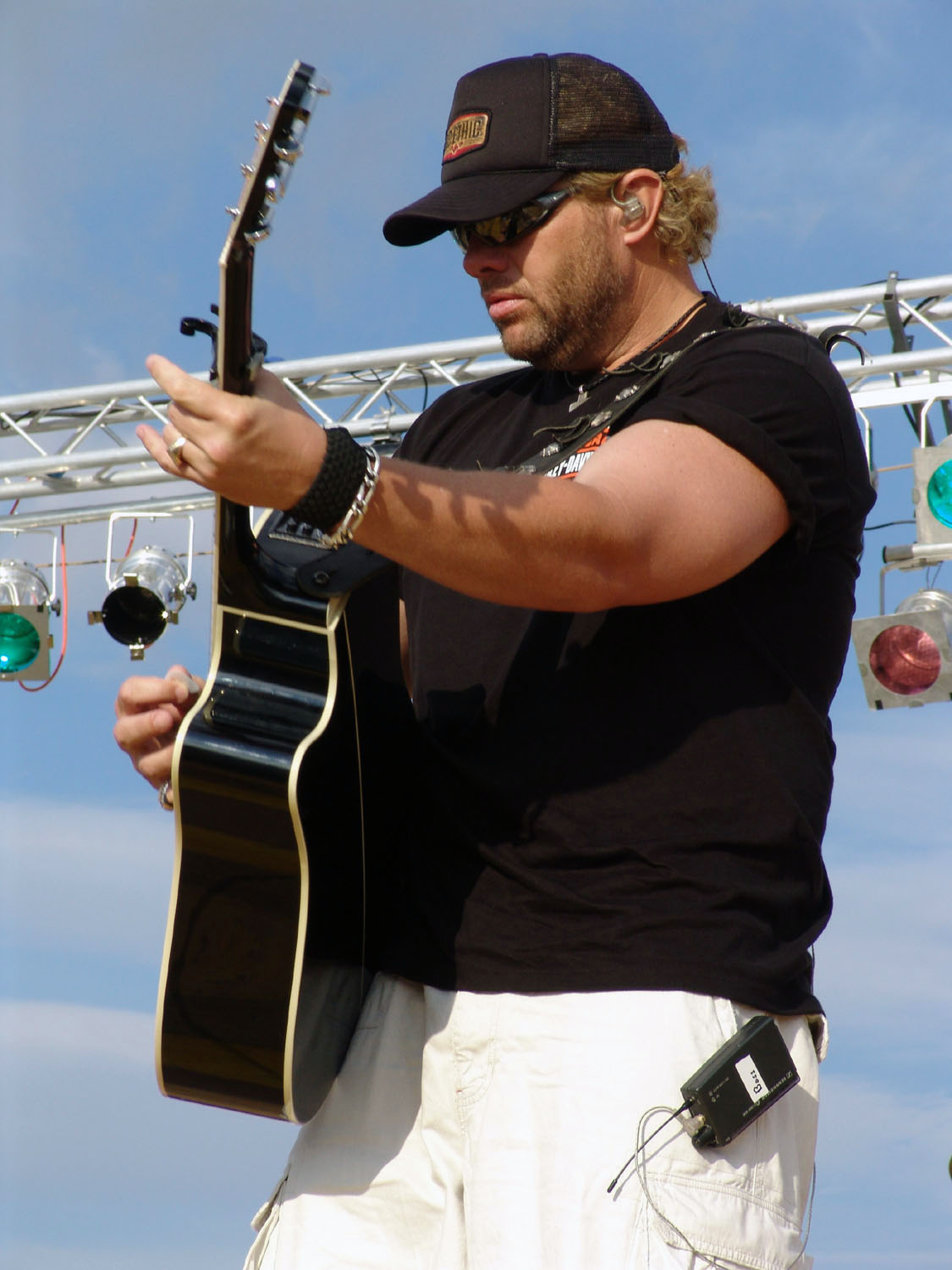
A Legacy That Speaks Louder Than Words
Toby Keith’s legacy is not one that can be measured by album sales or chart-topping hits. It is a legacy built on integrity, on showing up when it mattered most, and on giving everything he had—without asking for anything in return. His story is one of quiet strength, of a man who made a promise and kept it, year after year, even in the face of immense personal struggles.
And as his music continues to echo in the hearts of those who served, his promise lives on, not in the applause of the crowd, but in the memories of those who know that what he gave was far more than just a concert—it was a piece of home, a reminder that they were never forgotten.
Toby Keith’s story is not just a story of a musician. It’s a story of a man who found his purpose not in the fame or the accolades, but in something far more profound: the quiet, unwavering commitment to a promise made to those who needed it most.