
In the heart of the Great Depression, a boy named Thomas Daniel Conway was born into a world that wasn’t ready for him.
His father, an Irish immigrant, worked as a groom for polo ponies on a wealthy estate, while his mother, a Romanian woman named Sophia, took up work as a cleaning woman and seamstress. It was a humble start in Willoughby, Ohio, during a time when the country was struggling to stay afloat.
Despite these hardships, the Conways shared a bond built on resilience, hard work, and love.
Growing up, Thomas faced a challenge that many could not understand: dyslexia. At a time when this condition had no name or understanding, Thomas’s difficulty with reading left him vulnerable to the cruelty of his classmates. He would often be called upon to read aloud in class, and his mistakes became a source of mockery.
While most children in his shoes might have been devastated by the laughter of their peers, Thomas found a way to turn the tables.
Rather than feeling humiliated, he began to embrace the laughter. He made it part of his performance, transforming the ridicule into a tool that would later serve him in his career. He had learned early that humor could be a powerful defense, and he would carry this lesson with him through life.
Despite the challenges of his dyslexia, Thomas found strength in the love of his parents. His father, a hardworking Irish immigrant, had his own struggles, yet he always made time for his son, fostering in him a love for adventure.
His mother, Sophia, was a steadfast and loving woman who made sure her family was always taken care of, even when resources were scarce. Their home was far from luxurious, but it was full of warmth. The kitchen ceiling, stained with beer from his father’s homebrews, was a testament to the Conways’ ability to make do with what they had.
It was not a perfect life, but it was one built on love, resilience, and an unyielding work ethic.
At a young age, Thomas dreamed of becoming a jockey, idolizing the men his father worked for. These jockeys were his heroes, and he imagined himself galloping on the backs of thoroughbreds, competing in the prestigious races he would watch from the sidelines. However, there was one problem—he was too tall.
The world of jockeys, with its strict height and weight requirements, would not allow for someone of his stature.
This early rejection, while difficult, only fueled Thomas’s desire to prove that he was more than the limitations others imposed on him.
Instead of letting this setback define him, Thomas set his sights on something else: the U.S. Army. At the age of 22, he was drafted and spent time serving his country.
Though it wasn’t the life he had envisioned, his time in the Army would prove to be a turning point. He returned to Cleveland after his service, and it was here that he began to seriously explore the world of entertainment.
He started writing skits for a local TV station, working alongside Ernie Anderson, a fellow comedian with whom he would form a lifelong partnership.
They would soon become known for their witty banter and irreverent humor. These early years were formative, shaping the comedic style that would define Thomas’s career.
It wasn’t long before a fateful encounter would change the course of Thomas’s life. A visiting comedienne named Rose Marie saw one of his sketches and was so impressed that she insisted he be sent to New York to pursue a career in comedy.
She recognized something in him that few others had seen—an unpolished but undeniable comedic talent. By 1962, Thomas found himself on the set of McHale’s Navy, a sitcom about a group of misfit Navy officers during World War II. While the show itself wasn’t a huge success, it served as a stepping stone to greater opportunities.
In 1967, Thomas’s big break came when he was invited to join The Carol Burnett Show, a variety program that would become a staple of American television. His role as a regular guest on the show allowed him to showcase his talents in ways he had never imagined.
But while Thomas was starting to gain recognition, his mother remained skeptical of his success. When he called her to tell her about his role on the show, she responded with advice that was far more practical than celebratory. “That crap on TV isn’t going to last,” she told him, suggesting he apply for a job at the local hardware store.
Despite her doubts, Thomas’s career continued to thrive, and his time on The Carol Burnett Show would eventually last 11 years.
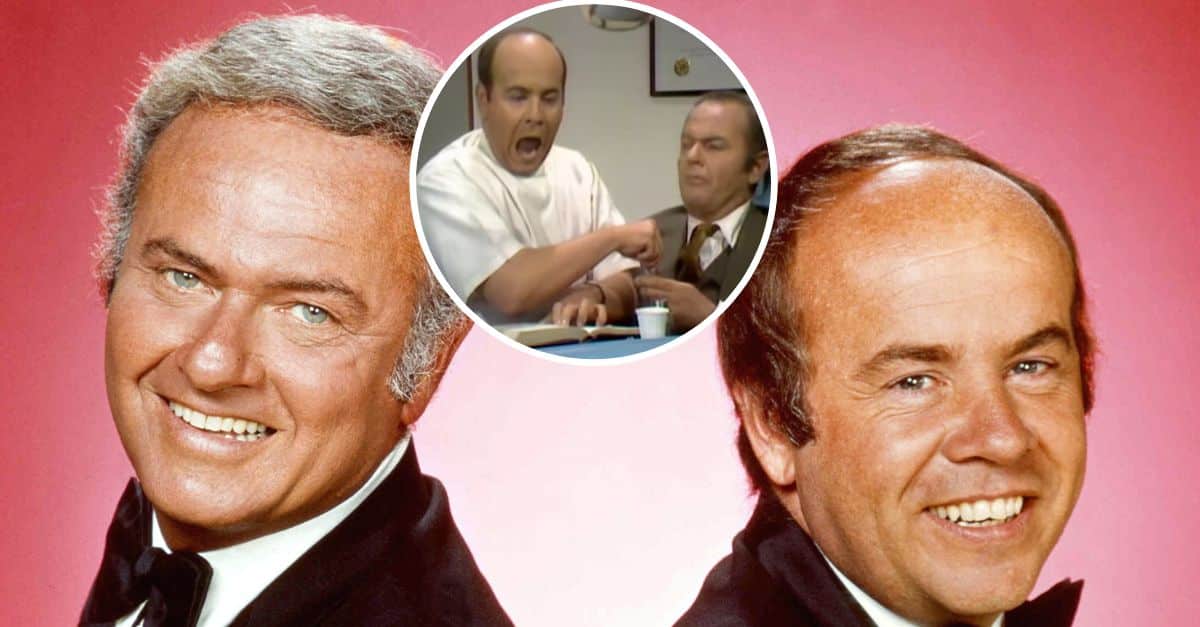
During his time on the show, Thomas’s comedic timing and chemistry with his co-stars—especially Harvey Korman—became legendary.
It wasn’t just the scripted material that made the show so memorable; it was the unscripted moments, the improvisation, and the pure, unadulterated laughter that flowed from the cast. Harvey Korman, in particular, often broke character due to Thomas’s infectious humor, leading to some of the most iconic bloopers in television history.
These spontaneous moments, in which Korman could not control his laughter, became a trademark of the show and made the outtakes as famous as the sketches themselves.
But Thomas’s humor wasn’t just about making people laugh; it was about connecting with them on a deeper level. He understood that laughter was a universal language that transcended boundaries. As his career progressed, he began to realize that his success was not just about fame or recognition. It was about the joy he brought to people’s lives and the relationships he built through his comedy. He wasn’t just entertaining; he was healing, lifting spirits, and bringing people together.
Despite his success, Thomas remained humble, often downplaying his achievements.
His six Emmys were a testament to his talent, but he never took them for granted. He always felt that he was just getting started, even when others thought his time had passed.
One of his most famous quotes, “They told me I was finished. I’m just getting started,” became the mantra that fueled his drive to keep going, no matter the obstacles.
In his later years, Thomas faced health struggles that would eventually take away the one thing he loved most—his timing. He was diagnosed with normal pressure hydrocephalus, a condition that caused fluid to accumulate on his brain, resulting in cognitive decline. As his health deteriorated, Thomas’s family became involved in a legal battle over his medical care.
His daughter Kelly and his second wife Charlene fought for control of his healthcare as he was left unable to speak.
Despite these challenges, Thomas’s legacy remained intact. He had spent his life defying the odds and bringing laughter to millions of people. When he passed away on May 14, 2019, at the age of 85, the world lost a comedic genius, but his impact would continue to be felt for years to come.
Carol Burnett, his close friend and colleague, paid tribute to him on social media, calling him “one in a million.” This tribute spoke to the unique nature of Thomas’s humor and his ability to touch the hearts of those around him.
Thomas Daniel Conway’s life was one of perseverance, humor, and heart. From the small, dyslexic boy who was laughed at in school to the man who made millions laugh on television, his journey was a testament to the power of resilience.
He proved that no matter where you come from or what challenges you face, you can always find a way to turn the world’s laughter into your own.
His legacy reminds us that even when life tells us we can’t do something, we can still rise, take the stage, and change the world—one laugh at a time. Thomas Daniel Conway didn’t just chase the spotlight; he made it his own, and in doing so, he left an indelible mark on the world of comedy.