
A Tension-Filled Moment That Shattered Expectations
On a seemingly typical day in 2022, Kid Rock, the rebellious rock star known for his unapologetic attitude and political commentary, walked into The View studio—unaware that moments later, every rule of so-called “safe television” would collapse in front of millions of viewers.
What was meant to be a routine appearance turned into one of the most dramatic and controversial moments in talk-show history.
What began as a conversation about music and fame soon morphed into an explosive exchange between Kid Rock and Joy Behar, one of The View’s co-hosts, whose political views and progressive stances often define her position on the show.
When Behar attempted to silence Kid Rock after a heated exchange on free speech and political correctness, the situation quickly escalated into a face-off between two strong-willed personalities.
The studio, once filled with laughter and light-hearted banter, suddenly became the stage for a high-stakes confrontation. Kid Rock’s refusal to conform to Behar’s expectations—his calm defiance in the face of criticism—would become the center of national attention.
His statement: “You can turn my microphone off, but you cannot silence my voice” reverberated across the media landscape, sparking debates about censorship, free speech, and the limits of political correctness in modern public discourse.
In this article, we will examine the events leading up to Kid Rock’s unforgettable stand on The View, the significance of his words, the cultural and societal implications of the confrontation, and the broader context of free speech in the entertainment industry.
We will also explore how this moment highlights the changing landscape of media and the shifting power dynamics between celebrities and hosts in today’s media-driven world.
Chapter 1: Kid Rock – The Unapologetic Rebel and Cultural Icon
Kid Rock, born Robert James Ritchie in 1971, is no stranger to controversy. As a multi-genre musician and cultural figure, he rose to prominence in the late 1990s and early 2000s, blending elements of rock, hip hop, and country into a unique sound that appealed to a wide-ranging audience.
Known for his bold, rebellious lyrics and politically charged messages, Kid Rock quickly became an icon for fans who saw him as a voice for those who felt ignored or marginalized by mainstream society.
While Kid Rock’s music is often celebratory and defiant, his public persona has been equally marked by his outspoken nature and willingness to challenge societal norms. His refusal to conform to Hollywood’s standards, as well as his unapologetic political views, has made him a polarizing figure. Whether he’s defending gun rights, criticizing the political elite, or speaking out against what he sees as the overreach of political correctness, Kid Rock is never one to shy away from controversy.
This trait would serve him well when he entered the lion’s den of daytime television: The View. Known for its politically liberal stance, the show often hosts debates between its co-hosts, who frequently discuss current events with sharp opinions.
Kid Rock, with his rebellious spirit and willingness to confront contentious issues, was bound to clash with the show’s hosts, particularly Joy Behar, whose progressive politics often put her at odds with conservative figures.
Chapter 2: Joy Behar – The Voice of Progressivism on The View
Joy Behar, a founding co-host of The View, is known for her sharp wit and unapologetic political commentary.
As one of the more outspoken liberal voices on the show, Behar has long been a champion of progressive causes, from women’s rights to LGBTQ+ equality and gun control.
Her positions often lead to heated debates with conservative guests, and her quick tongue and no-nonsense approach make her a formidable presence on television.
Throughout her career, Behar has been a staunch advocate for political correctness, often calling out what she perceives as toxic rhetoric or harmful ideologies. Her sharp, comedic style has earned her a loyal following, but it has also attracted criticism from those who view her as overly critical or intolerant of opposing viewpoints.
Behar’s conflict with Kid Rock began during their exchange on The View. As the conversation turned to the topic of free speech and media control, Behar attempted to steer the conversation into what she considered safe territory, making sure the discussion stayed within the boundaries of what is typically acceptable for daytime television. When Kid Rock pushed back, questioning the idea of “political correctness,” Behar’s patience wore thin, and she responded sharply, attempting to shut down his argument. This led to one of the most dramatic moments in the show’s history.
Chapter 3: The Confrontation – Kid Rock Challenges the Rules of Safe TV
It was at this point that Kid Rock’s true character emerged. Known for his willingness to speak his mind, he wasn’t about to let Behar dictate the direction of the conversation.
With his calm but firm demeanor, Kid Rock pushed back against Behar’s attempts to silence him, delivering a line that would send shockwaves through the studio:
“You cannot sit in a position of power, call yourself ‘the voice of the public,’ and then immediately dismiss anyone who doesn’t conform to your idea of how they should speak, think, or express their views.”
His words, carefully chosen and delivered with a quiet intensity, instantly shifted the tone of the conversation. The studio audience, who had been expecting a typical interview with lighthearted humor, fell into stunned silence. The cameras, which had been focused on the usual banter between host and guest, now locked onto Kid Rock, capturing the moment of defiance in real time.
Behar, visibly rattled by Kid Rock’s response, tried to regain control by reminding him that The View was a broadcast and not a stage for personal platforms. But Kid Rock wasn’t deterred. His response was steady, unwavering:
“This is your safe space. And you can’t tolerate someone walking in and refusing to filter what they believe just to make it comfortable.”
This moment encapsulated the clash of ideologies between Kid Rock and Behar. For Behar, the show represented a space where respectful, polite discourse was expected. But for Kid Rock, the show had become a platform for surface-level opinions, a space that only welcomed certain views and silenced others.
His refusal to conform to the show’s scripted dynamics was a statement about the power of free speech and the importance of standing by one’s convictions, no matter the setting.
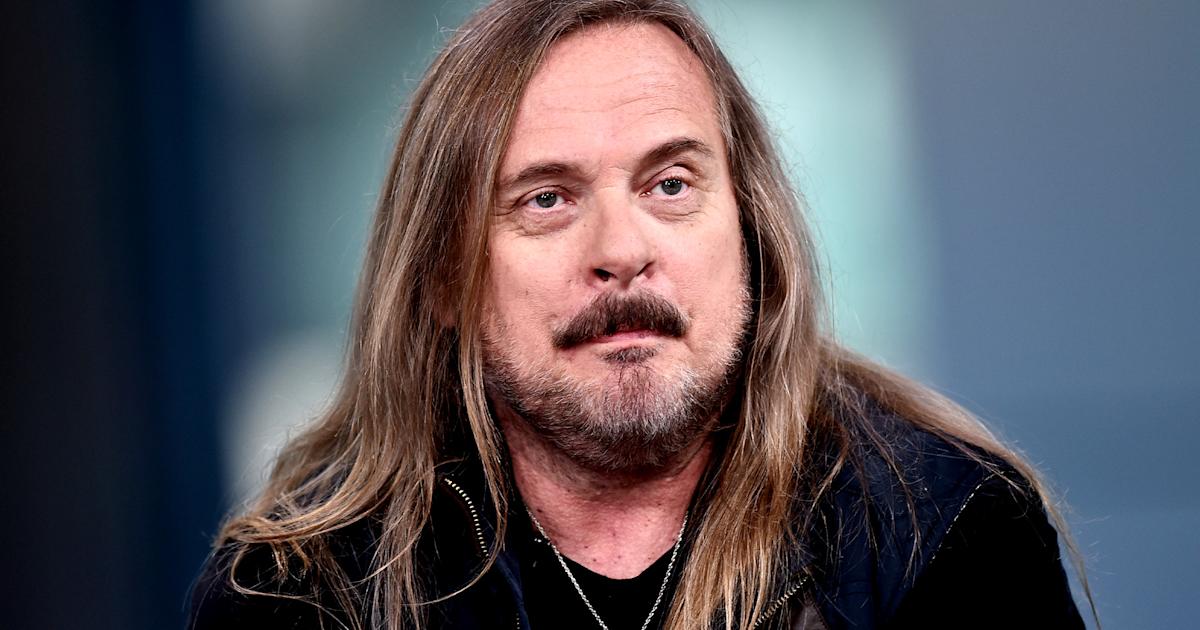
Chapter 4: The Walk-Off – Kid Rock’s Defiant Exit
What happened next was nothing short of extraordinary. In a calm, deliberate motion, Kid Rock unlatched his microphone and placed it on the desk in front of him.
There was no shouting, no dramatic exit—just a quiet yet powerful decision to walk away.
“You can turn off my microphone,” Kid Rock said, “but you cannot silence my voice.”
With those words, he stood up and walked off the set, leaving behind a room filled with stunned silence. The show, which had prided itself on its ability to entertain and provoke discussion, was left in disarray. The audience sat frozen, unsure of how to react to the unprecedented moment that had just unfolded.
Fallon, usually quick with humor or a comment, could only watch as the cameras shifted.
This walk-off wasn’t just a moment of defiance—it was a powerful declaration about the limits of media control and the need for authentic conversations.
Kid Rock’s exit became an instant talking point across social media platforms, with viewers divided over whether his actions were justified or whether he had crossed a line.
For many, it was a rare moment of realness in a world that often values performances over substance.
Kid Rock’s calm, unwavering stance was a reminder that, sometimes, the most powerful messages come not from loud outbursts, but from quiet acts of defiance.
Chapter 5: The Aftermath – A Nation Reacts
Following Kid Rock’s dramatic exit, the media was abuzz with reactions. Some praised him for his bravery and commitment to free speech, while others criticized him for being disrespectful and unprofessional. What was clear, however, was that the incident had struck a nerve with people on both sides of the political spectrum.
For Kid Rock’s fans, his walk-off was seen as a victory for authenticity. They believed he had taken a stand against the growing culture of political correctness that they felt had permeated much of the media and entertainment industry. For others, particularly those who viewed his comments as out of touch with the realities of the social justice movement, his actions were seen as a refusal to engage in meaningful dialogue.
In the days that followed, social media exploded with commentary on the event. Memes, gifs, and hashtags flooded the platforms, with people expressing their opinions about whether Kid Rock was in the right or whether he had taken things too far. News outlets debated the incident, with some framing it as an act of rebellion against media censorship, while others criticized it as an example of toxic masculinity and political grandstanding.

Chapter 6: The Larger Implications – Free Speech vs. Media Control
Kid Rock’s confrontation with Behar is just the latest chapter in the ongoing debate about free speech in the media. In an era where media companies wield immense power over public discourse, there is a growing concern that certain views are being silenced in favor of more palatable, mainstream opinions.
Kid Rock’s walk-off was a challenge to this trend—a call for authenticity in a world where celebrity voices are often shaped by publicists, managers, and corporate interests.
His decision to walk off the set was a refusal to play by the rules of a media environment that values comfort over confrontation.
In this sense, Kid Rock’s actions were both a personal statement and a broader commentary on the state of free speech in the media. He wasn’t just criticizing The View; he was criticizing an entire system that, in his view, had become too comfortable with silencing dissenting voices in the name of politeness and respectability.
A Moment That Redefined Late-Night Television
Kurt Russell’s exit from The Tonight Show with Jimmy Fallon was a powerful statement about the importance of authenticity and free speech.
His refusal to be silenced in a setting that demanded conformity was a rare and dramatic moment in late-night television—a moment that redefined what it means to engage in a real conversation.
The clash between Kid Rock and Joy Behar on The View also serves as a reminder that true authenticity often comes with consequences. In a world that values spectacle and performance, moments like this stand out as powerful reminders of the need for honest, unfiltered conversations—conversations that challenge the status quo and invite us to think deeply about the world we live in.
As the media landscape continues to evolve, moments like these will only become more significant. Kid Rock’s stand for free speech, and his quiet yet powerful exit from The View, will be remembered as one of the defining moments of our time—a call for the restoration of truth and authenticity in a world dominated by noise.