
Introduction: From Skepticism to Triumph
When Peter Dinklage was first approached to play Tyrion Lannister in Game of Thrones, he was skeptical. Hollywood had long tried to place him in stereotypical roles—often as a whimsical “elf” or a “magical creature”—and Dinklage was determined not to be relegated to those caricatures. His response to the producers was blunt and simple: “I don’t want a long beard and pointy shoes.”
At that moment, Peter Dinklage wasn’t just rejecting a role. He was rejecting an entire industry’s idea of who he was supposed to be. He was tired of being viewed as a punchline, tired of being defined by his height. What he sought was to be seen as a man—a serious actor who could transcend the limits imposed by his physical appearance. His journey is a story of perseverance, resilience, and, most importantly, self-respect.
The Struggles of Hollywood’s Casting System
For many years, Hollywood saw Dinklage as nothing more than a curiosity—a character actor with a physical trait that was often exploited for comedic effect. He had been offered roles that reduced his stature to the punchline of jokes. He was often cast in roles that played off the “dwarf” stereotype, a box that the industry seemed desperate to place him in.
But Peter Dinklage knew better. He refused to accept these roles, despite the financial strain they caused him. As he once reflected, “I said no a lot. It is very easy to say no when you have a bank account, but it’s much harder when you’re hungry.” He wasn’t just turning down opportunities; he was making a stand for the kind of actor he wanted to be. He chose hunger over humiliation.
The Hollywood system, at the time, wasn’t interested in telling stories about people like him unless those stories were reduced to stereotypes. Dinklage’s decision to refuse roles that mocked his height was not an act of arrogance or pride—it was an act of self-respect. His choice to wait for a meaningful opportunity, rather than take whatever was offered to him, was a crucial turning point in his career.
The Struggle of a Struggling Artist
Peter Dinklage didn’t have the luxury of a comfortable life when he moved to New York City. He lived in a cramped Brooklyn apartment, often without heat, sharing the space with rats. Despite the harsh conditions, Dinklage’s drive to become an actor never wavered. He worked a data-processing job for six years, a position he hated, simply to pay the bills. It was a far cry from the life he had dreamed of when he first set out to conquer the acting world.
But those years in New York were formative. They shaped him into the determined, focused man he would eventually become. The poverty and isolation didn’t break him; they strengthened his resolve. His talent was undeniable, but Dinklage understood that success wasn’t just about talent—it was about fighting for the opportunity to use that talent in meaningful ways.
Many actors would have taken whatever roles came their way, no matter how demeaning or limiting. But Dinklage was different. He turned down roles that leaned on the same tired stereotypes, roles that would reinforce the industry’s narrow vision of who he was. Even when he had no money and his future seemed uncertain, he stuck to his principles, refusing to settle for anything less than the respect he knew he deserved.
The Turning Point: “The Station Agent”
Dinklage’s patience and dedication eventually paid off when he landed the role in The Station Agent (2003). The film was a breakthrough moment in his career, and it marked the first time that audiences saw him as a leading man, not just a character actor. In The Station Agent, Dinklage played a complex, quiet man named Finbar McBride, whose journey is about finding human connection and belonging.
What set Dinklage apart in this role was his ability to communicate volumes with just a look, a pause, or a small gesture. He didn’t need to rely on the crutches of dialogue or over-the-top theatrics. His performance was grounded in subtlety and depth. For the first time, audiences saw Dinklage not as a “dwarf actor” but as a talented, nuanced performer capable of carrying a film on his own.
The success of The Station Agent opened doors for Dinklage, allowing him to show the world that his stature didn’t define him. He was not the punchline of a joke; he was a fully realized actor with a wide range of emotions and experiences to draw from.
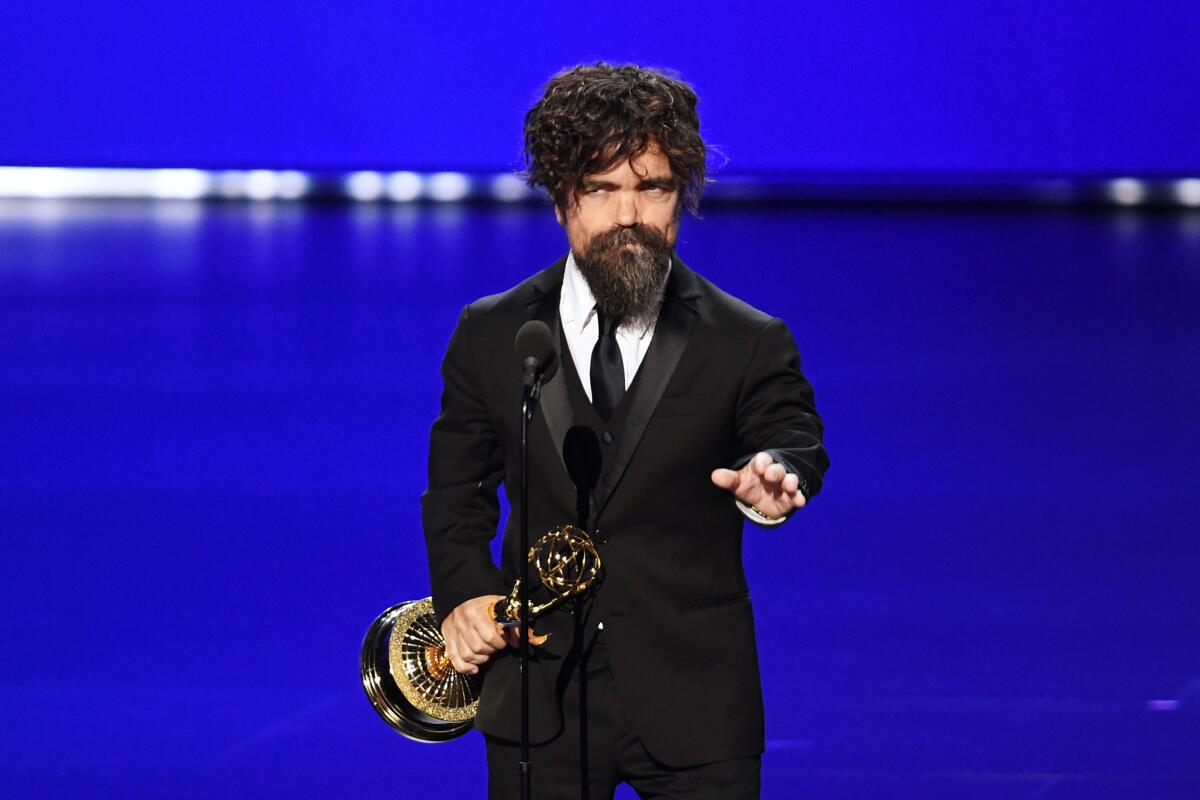
The Breakthrough Role: Tyrion Lannister in “Game of Thrones”
When Game of Thrones came calling, Dinklage was still hesitant. The role of Tyrion Lannister was an opportunity, but it was also a risk. He had already built a reputation as an actor who refused to play by Hollywood’s rules, and he didn’t want to be pigeonholed into another stereotypical role. However, after reading the script and understanding the depth of Tyrion’s character—his intelligence, wit, and complexity—Dinklage realized that this was different.
Tyrion Lannister, a character born into a world of privilege and power but trapped in a body that society deemed weak, was the perfect role for Dinklage. He wasn’t a hero because of his physical prowess—he was a hero because of his mind. Tyrion’s intelligence and cunning made him one of the smartest, most influential characters in the series. He was a man who fought with words and strategy, not swords.